
Most industrial motor failures end in a winding or a bearing issue, and most of them start to fail months earlier, in the specification, the installation or the maintenance routine. On site, two causes usually act together: a blocked fan on a hot afternoon, or a drive retrofit with no shaft earthing.
Temperature buffer is where the gap between insulation class and temperature rise matters. The TECO MAXe3 Mining is Class H with a rise under 80 K, with under 75 K on most frames, and holds full output up to 60°C ambient. The TECO Te3 is rated to 50°C. Above 1,000 m, or above the rated ambient, derate with our temperature and altitude factors.
Decide winding protection at the same time: PTC thermistors from frame D160 on single speed TECO Te3 and TECO MAXe3, PTC 150°C from frame 160 on the TECO MAXeV4, and PT100 RTDs in the windings or bearings fitted by our TECO ModShop where the site standard asks for them, usually from 250 kW.
On a crusher or a conveyor that restarts often, check the starts per hour before the motor is ordered. Each consecutive start heats the rotor faster than it can cool and on the TECO MAXe3 the permitted number depends on frame and load inertia. Send us the duty and we check it.
An unbalanced supply can heat one or two phases more than the others, and a lost phase leaves the motor drawing enough current on the remaining one or two phases to burn the winding as the remaining connected phases try and provide the torque the load requires. Both are caught at the starter: our thermal overload relays combine overload and phase failure protection.
On a VSD, the PWM output adds voltage stress, losses, vibration and noise. Our low voltage stock motors are already rated for it: 1,600 V peak and 6,500 V/µs at the terminals on Class F, 2,200 V and 8,500 V/µs on Class H.
For induced shaft currents on larger motors, fit an earthing brush at the drive end and, recommended from frame 280 and above, an insulated bearing or housing at the non-drive end, and keep the carrier frequency at 5 kHz or lower. Protection is only assured with both fitted; a common mode filter at the drive output is the alternative but typically more expensive. Install to AS 60034.17 and IEC 60034-25.
Most of the bearing failures we see are determined before the motor runs: a belt load the bearing was never selected for, a grease routine that does not suit the motor, or a motor left standing on a vibrating induced structure.
If the motor is going on a vee belt drive, advise the pulley sizes and belt tension on the enquiry. Apart from 2 Pole motors above frame D180, the TECO Te3 range is specified for direct coupling and vee belt drive, and we check the bearing against any belt load. The TECO MAXe3 range takes direct or belt drive from 4 Pole and larger up to D315MC, the Mining version on 250 frame and above has a roller bearing at the drive end.
From D200 frame on the MAXe3 and frame D180 on the Te3, the bearings have a flush-through grease relief system fitted. Re-grease with the motor running and the old grease leaves the housing instead of being pushed back through the bearing. MAXe3 bearings are C3 clearance and typically use Mobil Polyrex EM. Smaller frames are greased for life.
Keep the shaft locks fitted until the motor is on its base. A stationary motor on a vibrating deck can damage its bearings before it has even turned once. Shaft locks are fitted on 2 Pole motors from frame 180 and 4 Pole motors from frame 200.
Rotor assemblies are balanced to G2.5, so if vibration increases after commissioning, look at the alignment and the coupling first.
Water and dust can enter at the fan cover, the shaft seal and the terminal box. For washdown, coal dust or outdoor duty, specify IP66 protection: standard for TECO Te3 Severe Duty, TECO MAXe3 and TECO MAXeV4. The standard TECO Te3 is IP55 (IP56 and IP66 on request). The TECO MAXe3 Mining drains condensate through porous plugs, the Te3 Severe Duty runs metal-backed gamma seals on the shaft, the Te3, MAXe3 and MAXeV4 terminal boxes have a one-piece neoprene gasket and its own IP66 rating.
A motor that stops overnight in a humid plantroom condenses moisture inside. Anti-condensation heaters are energised when the motor stops and off when it runs, this is an option on all ranges through the certified TECO ModShop.
What we would put in the routine: trend vibration against ISO 20816 from commissioning, check bearing temperatures after each re-grease, trend winding temperature where RTDs are fitted, check terminal tightness, and inspect drain plugs and gaskets periodically.
Never insulation test thermistors or RTDs above 2.5 V otherwise these devices will be damaged.
Our low voltage stock, from the TECO Te3 (IE3 to 500 kW) and MAXeV4 (IE4 to 315 kW) to the MAXe3 Mining, AFJE/AFJN (to 450 kW) and MAX Ex Hazardous, is held in Australia and New Zealand, and the TECO ModShop network adds heaters, RTDs, encoders, special cable entries and two-pack paint without the need to return to the factory. In medium and high voltage we supply squirrel cage motors up to 11,000 V in TEFC and 13,800 V in TEAAC, to bespoke design or as drop-in replacements, for safe and hazardous areas.
Usually bearings, then winding insulation. Both failures are usually the end of a longer story: a belt load the bearing was not selected for, lack of grease, a drive with no shaft current protection, an ambient or load above the rating.
Yes, through voltage stress on the insulation and shaft induced currents through the bearings. Our stock motors carry inverter-rated insulation as standard. On larger motors, fit an earthing brush and an insulated bearing and keep the carrier frequency at 5 kHz or lower.
To the interval for the frame and speed, with the motor running and use the grease named on the nameplate. MAXe3 motors from D200 and Te3 motors from D180 have a grease relief system fitted as standard; smaller frames are greased for life.
For a motor that has failed, or one you want to keep running, send us the nameplate, the application and the site conditions through the Contact us page. The full range of TECO electric motors is on this site.
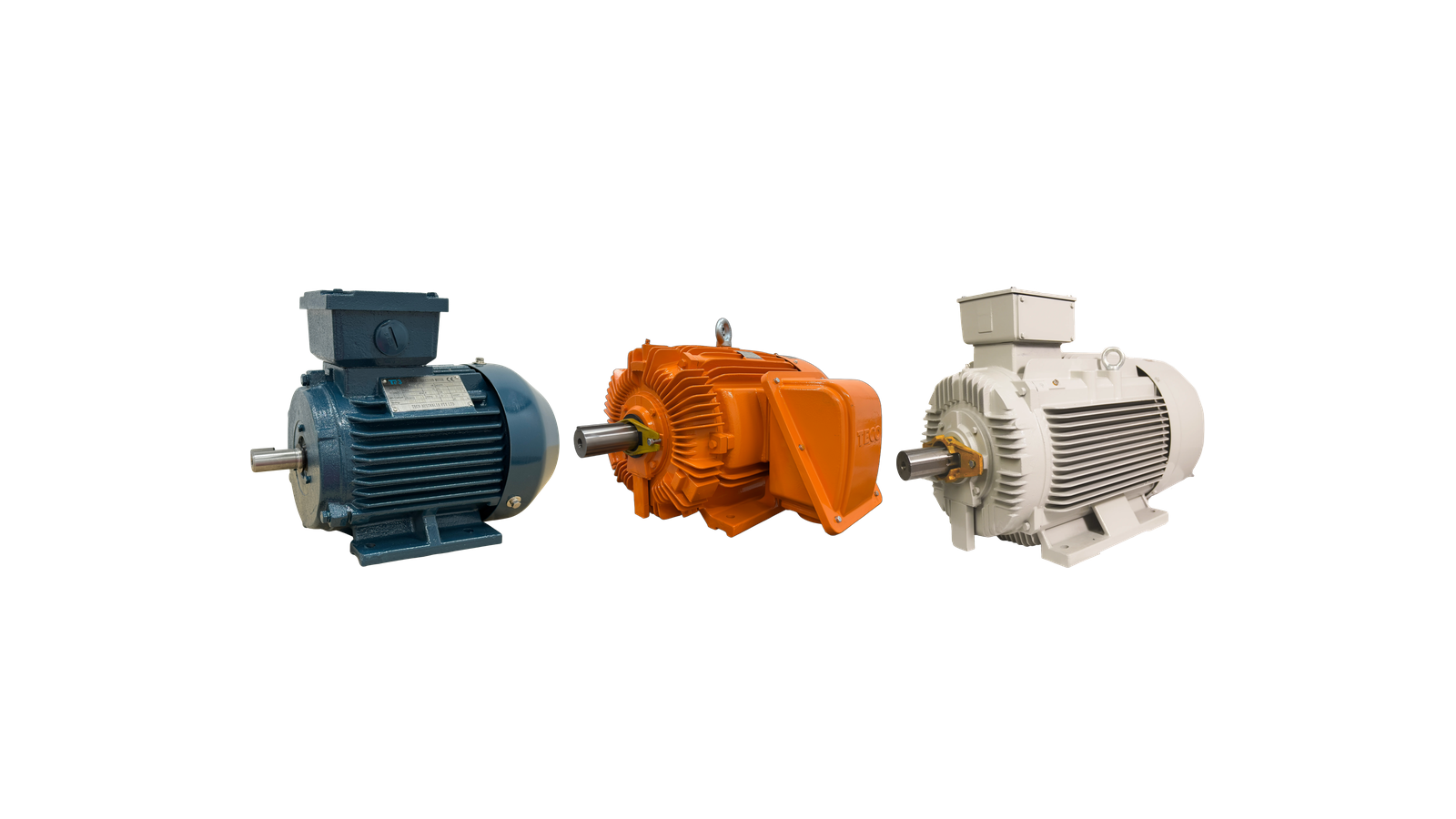
Specify and select a three phase motor in this order: load and duty, then the drive arrangement, then the site, and only then the efficiency class and the frame. Wrong
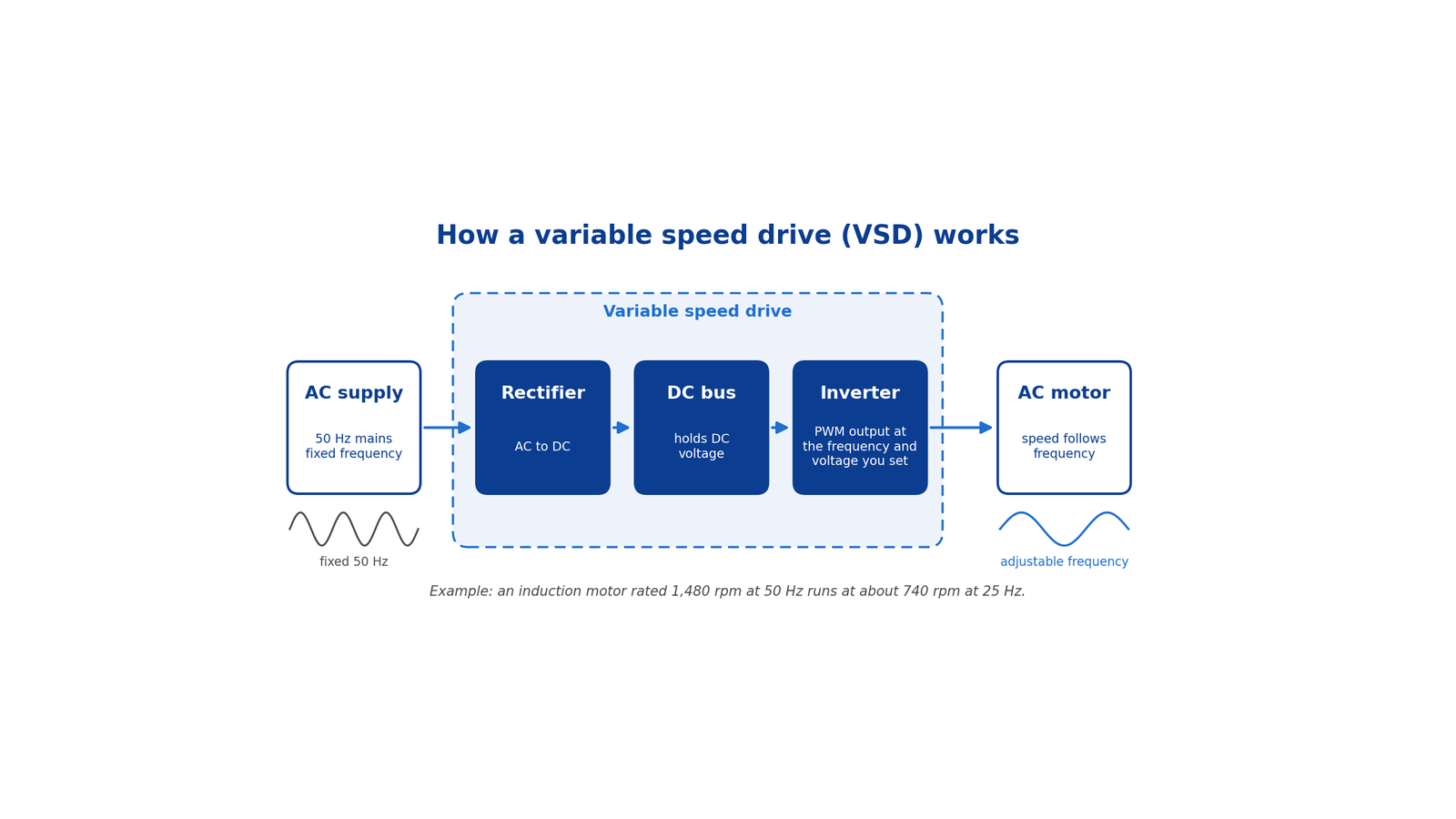
A variable speed drive (VSD) is a power electronic controller that sets the speed of an AC motor by varying the frequency and voltage it supplies, instead of running the
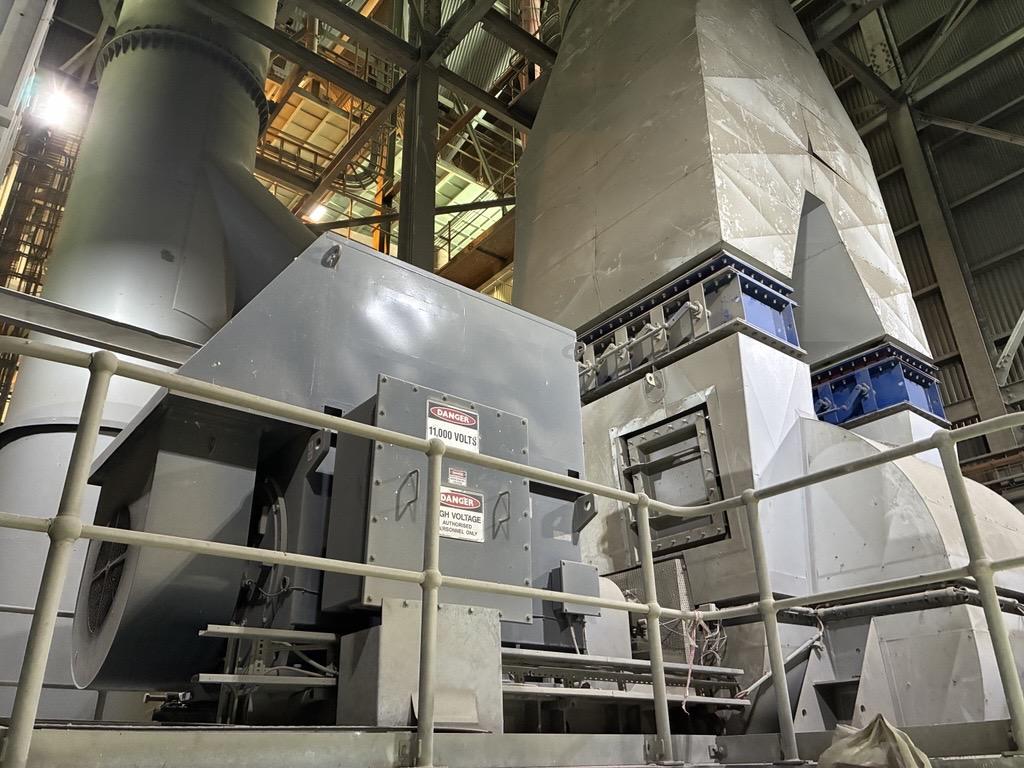
Most electrical engineers and industrial electricians have worked with low voltage (LV) motors throughout their careers, from a 4-copper-wire 15 V HVAC fan in an office building to an irrigation