
Posted on
AS/NZS 1359 is the series of Australian and New Zealand standards that motor specifications and nameplates have referred to for decades. Many of its parts have since been superseded or redesignated as AS 60034 standards, which are aligned with the IEC 60034 series used internationally. A specification that still cites AS/NZS 1359 part numbers is therefore not wrong, but it points to documents that in many cases now carry an AS 60034 number and IEC-aligned content.
The legal efficiency requirement in Australia sits in a separate instrument. The Greenhouse and Energy Minimum Standards (Three Phase Cage Induction Motors) Determination 2019 sets the minimum energy performance standard (MEPS) levels in its own tables and refers to IEC 60034-30-1 and IEC 60034-2-1 for interpolation and testing. This guide sets out how the AS/NZS 1359 references map to current standards, which motors are in scope for MEPS, what registration means for a supplier, how MEPS relates to IE2, IE3 and IE4, and what to check on TECO electric motors before they go on a motor schedule.
The AS/NZS 1359 series covered rating, performance, dimensions, cooling, protection and efficiency of rotating electrical machines. Standards Australia has progressively replaced or redesignated many of these legacy parts as AS 60034 standards, adopting the corresponding IEC 60034 parts, so that the Australian and international requirements now read the same. In practice this means three things for a specifier.
The 2019 determination treats three-phase cage induction motors as a single product class when all of the following apply:
Its efficiency tables give values for 50 Hz and 60 Hz motors. The determination does not cover:
Two consequences follow for a specification. A motor rated 185 kW or above is outside MEPS, so its efficiency has to be specified by datasheet value or IE class. Single-phase motors are not part of this product class.
Section 17 of the Greenhouse and Energy Minimum Standards Act 2012 states that a person must not supply, or offer to supply, a product in a class covered by a GEMS determination if the model is not registered against that determination. Section 16 applies the same prohibition to a product that does not comply with the determination. Both sections apply at the offer stage, so the registration question belongs in the tender, before the purchase order. Ask each supplier for evidence of GEMS registration for every in-scope model quoted.
The determination sets two levels. Both are assessed on efficiency at 75% or 100% of rated load.
The naming needs care. The determination's own notes describe IE2 as "High Efficiency" and IE3 as "Premium Efficiency" in IEC terms, while the Australian "high efficiency" designation corresponds to the IE3 table. A datasheet that says "high efficiency" should state the IE class beside it. IE4, the class of the TECO MAXeV4, sits above IE3 in IEC 60034-30-1.
Under section 15 of the determination, tests follow subclause 6.1.3 of IEC 60034-2-1 Ed. 2.0. Schedule 2 allows IEEE 112 Method B (2004 and 2017 editions) as alternative test methods. TECO data follows the IEC route: the TECO Te3 brochure states IEC 60034-2-1 method 2-1-1B, and the TECO MAXeV4 brochure gives typical values tested to IEC 60034-2-1:2014 with tolerances to IEC 60034-1.
When two datasheets are compared, check that both efficiencies come from the same test method and the same load point. An efficiency quoted at 100% load under one method is not directly comparable with a figure quoted at 75% load under another.
Standards also govern the motor's mounting dimensions, and this is where legacy and current references can differ in a way that matters on site. Modern Australian and IEC (CENELEC) frame dimensions are largely harmonised, but older Australian installations can carry dimensional differences from the European frames, particularly on 250 and 280 frame motors. A frame number on an old nameplate is therefore not a guarantee that a current motor of the same frame drops onto the same baseplate and coupling.
Before a like-for-like replacement is ordered, confirm mechanical interchangeability against the installed motor: shaft height, shaft diameter and extension, foot hole spacing and flange dimensions, compared with the dimension tables in the current TECO catalogue for the model quoted. Where the dimensions do not match, the options are an adaptor baseplate, a modified shaft or a different frame, and each should be decided before the order, not at installation.
New Zealand regulates the same motors through the Equipment Energy Efficiency (E3) programme, which it runs jointly with Australia. EECA states that three-phase electric motors must comply with MEPS and with mandatory energy performance labelling, which requires set information on the nameplate. The scope matches the Australian determination: 0.73 kW to less than 185 kW, 2, 4, 6 and 8 poles, up to 1,100 V AC. Efficiency levels are IE2, with IE3 for high efficiency. Importers and manufacturers must register products before they are sold, under the Energy Efficiency (Energy Using Products) Regulations 2002.
The TECO three-phase electric motors most often specified for general industrial duty state their efficiency position in the catalogue.
TECO MAXe3 (types AEMB and AFJE/AFJN): the catalogue states that these motors exceed the high efficiency requirements of the GEMS acts and regulations. From 0.75 kW to less than 185 kW, 2 to 8 poles, they also comply with the IE3 level of IEC 60034-30-1 at 50 Hz, single speed, direct on line. The stainless steel rating plate confirms compliance with the MEPS efficiency standard. All motors in the range are rated IP66.
TECO Te3: the brochure states that all motors meet or exceed the minimum efficiency level requirements of the Australian and New Zealand MEPS and of IEC 60034-30 where applicable. The range runs from 0.55 kW to 500 kW.
TECO MAXeV4: an IE4 Super Premium Efficiency motor from 0.75 kW to 315 kW, in 2, 4 and 6 pole versions and frames 80 to 355L. The brochure lists MEPS and AS/NZS compliance.
For each motor on the schedule, confirm six points:
AS/NZS 1359 is the legacy Australian and New Zealand standard series for rotating electrical machines. Many of its parts have been superseded or redesignated as AS 60034 standards, aligned with IEC 60034, so older references to AS 1359 on catalogues and drawings should be read as their AS 60034 equivalents. The legal efficiency levels for three-phase motors in Australia are set by the Greenhouse and Energy Minimum Standards (Three Phase Cage Induction Motors) Determination 2019.
Three-phase cage induction motors rated from 0.73 kW to less than 185 kW, up to 1,100 V AC, with 2, 4, 6 or 8 poles. Under the GEMS Act 2012 the model must be registered before the motor is supplied or offered for supply. Submersible, integral, switchgear-reconfigured multi-speed, S2 duty and high slip torque motors are among the classes not covered.
No. The MEPS table in the 2019 determination is equivalent to IE2. The separate high efficiency table is equivalent to IE3, and only motors that meet it may be designated "high efficiency". TECO MAXe3 motors are IE3 from 0.75 kW to less than 185 kW, and the TECO MAXeV4 is IE4.
New Zealand applies MEPS and labelling to three-phase motors through the E3 programme, administered by EECA under the Energy Efficiency (Energy Using Products) Regulations 2002. The scope and the IE2 and IE3 levels match Australia, and products must be registered before sale.
Send TECO the motor list with rated output, poles, voltage, duty and, for replacements, the frame and mounting details of the installed motor, and ask for the datasheet efficiency, registration details and dimension drawing for each model. Contact TECO to discuss the schedule or request a quote.
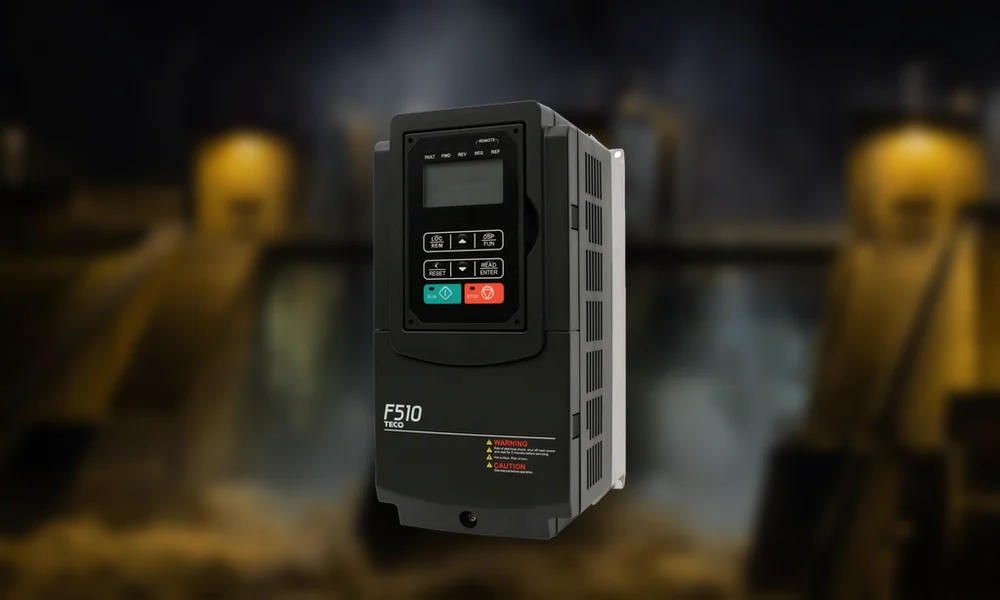
A variable speed drive (VSD) earns its place when pump flow demand varies throughout the day and the pump would otherwise be throttled or repeatedly cycled. In water and wastewater
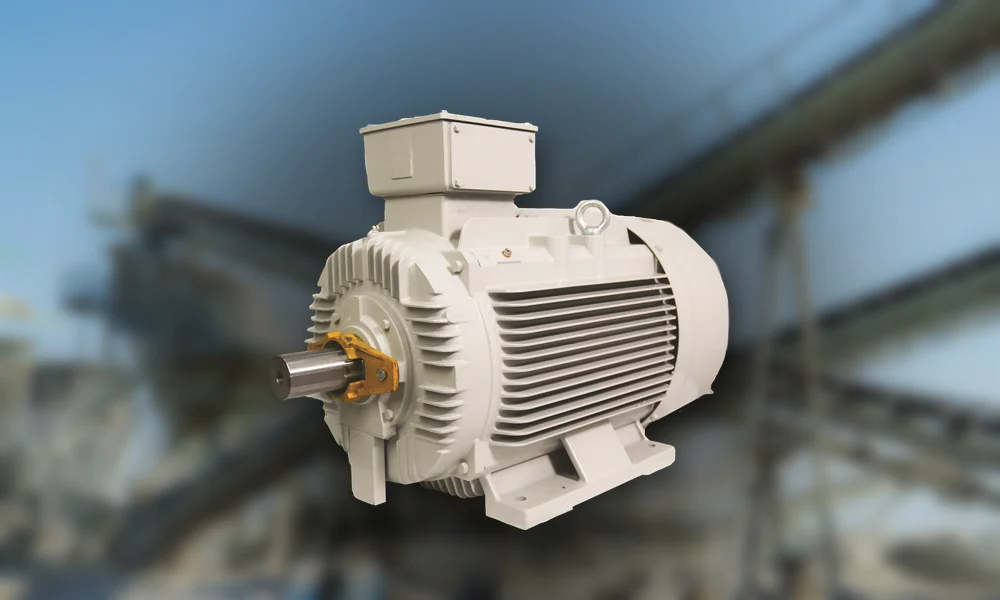
An IE4 induction motor reaches its efficiency class on a plain 50 Hz supply, with a contactor and an overload relay in front of it. The TECO MAXeV4 is tested
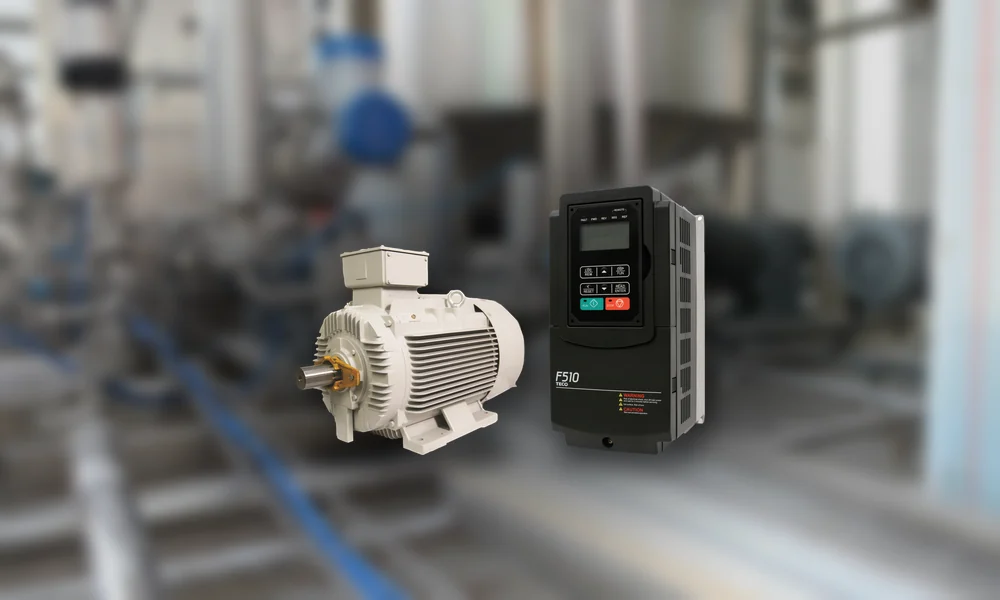
The efficiency class is set by the design and does not move with the way the plant is run. The TECO MAXeV4 is IE4 Super Premium Efficiency to IEC 60034-30-1