
Posted on
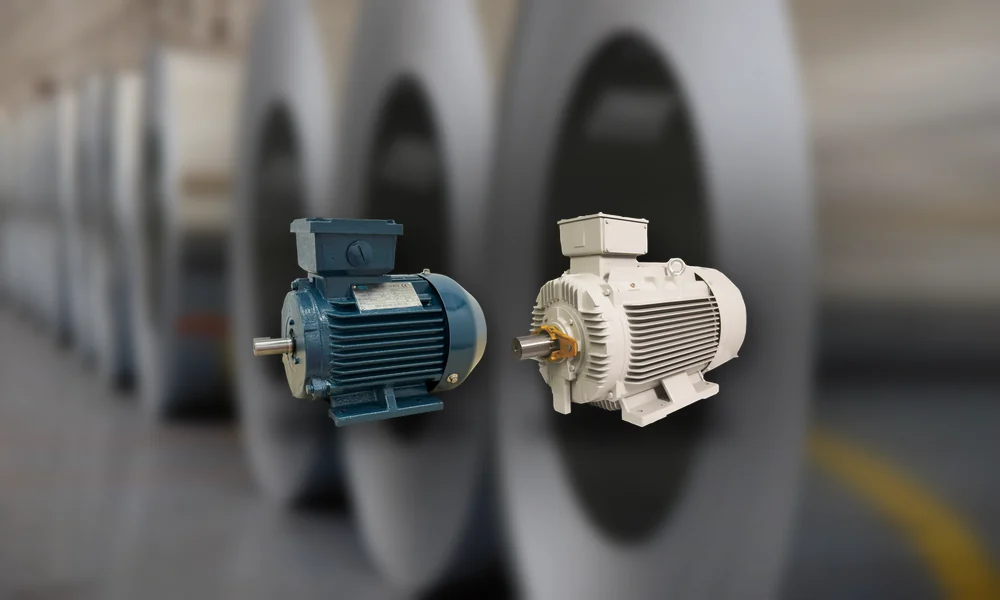
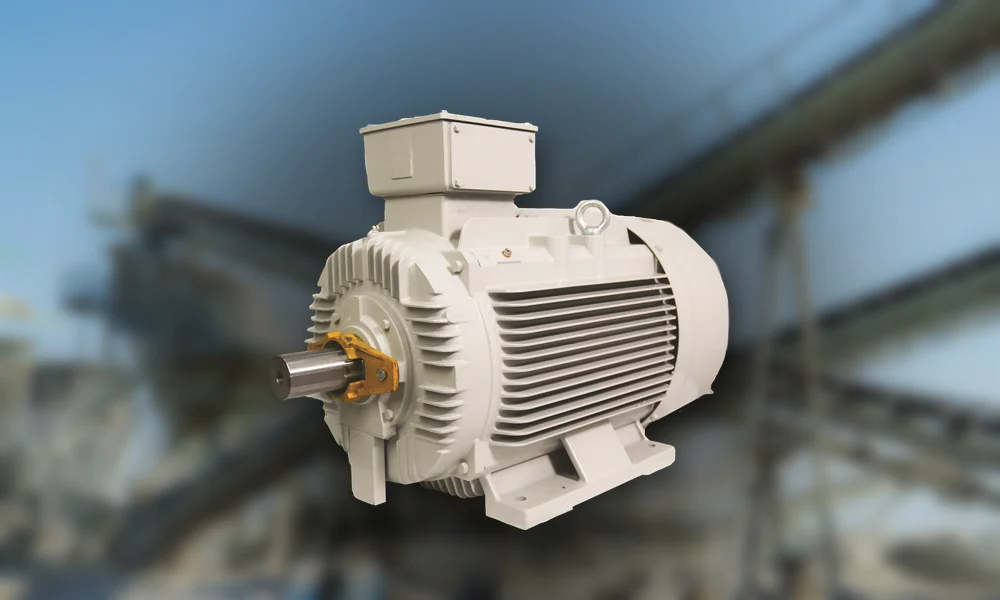
The efficiency class is set by the design and does not move with the way the plant is run. The TECO MAXeV4 is IE4 Super Premium Efficiency to IEC 60034-30-1 across 0.75 kW to 315 kW. The TECO Te3 is IE3 from 0.55 kW to 500 kW and meets the Australian and New Zealand MEPS (minimum energy performance standards, the legal efficiency level for motors sold here). At 0.75 kW 4 Pole the MAXeV4 runs at 85.7%, against 82.5% for IE3 and 79.6% for IE2. At 75 kW the gap narrows to 96.0% against 95.0%, and the kilowatt-hours behind each point grow with the rating.
Energy is approximately 95% of a motor's lifetime cost, maintenance 3% and purchase price up to 2%. On continuous duty at continuous high load the MAXeV4 pays back in two years or less against an IE2 motor and three years or less against IE3. On a motor that runs a few hundred hours a year the purchase price carries more weight and the class may matter less.
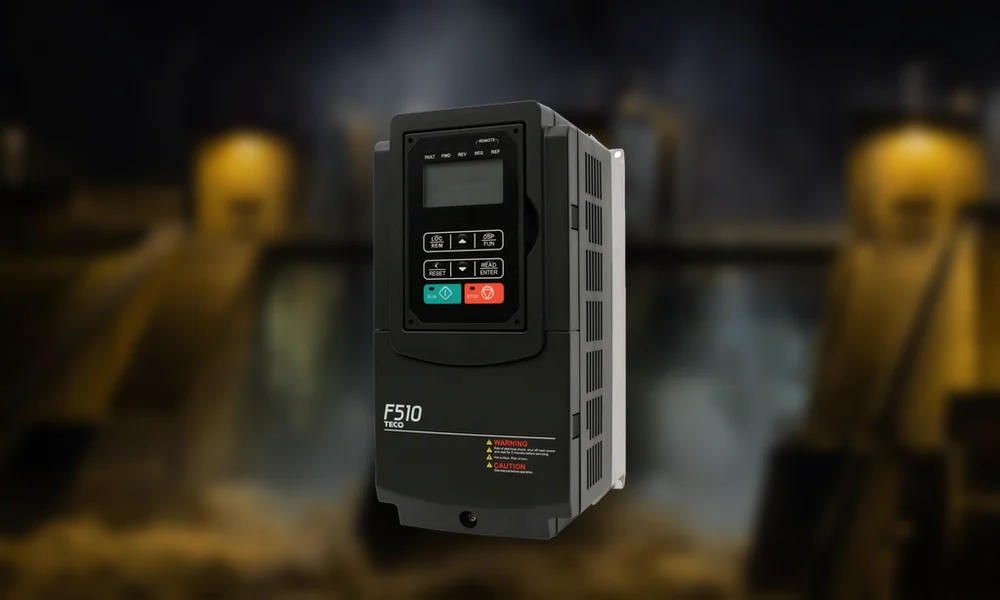
A variable speed drive leaves the motor's efficiency class where it is and lowers the energy that the load asks for. On a centrifugal pump or fan the saving comes from the speed, so we put the drive in the conservation column even though it arrives in the efficiency budget. The TECO F510 is built for variable-torque pump and fan duty, with PID control, sleep mode, dry-run protection and native control of up to four pumps. The TECO E710 lowers energy use on smaller pumps by matching pump speed to system demand. On the motor side, run a TECO Te3 on variable-torque loads between 5 Hz and 50 Hz without derating, and install the pair to AS 60034.17 and IEC 60034-25.
The two measures stack. The MAXeV4 holds its IE4 gain under direct-on-line starting, on a soft starter and on a drive, so the class pays on a fixed-speed conveyor where no drive is planned, and the drive pays on top of it where the load varies. From frame 160 the MAXeV4 carries PTC 150°C thermistors as standard, which is the thermal protection a drive integration needs.
Switching off a motor that is not needed removes every kilowatt-hour it would have drawn. Scheduling a large motor to another hour moves the kilowatt-hours and leaves the total unchanged, so it belongs in the supply contract conversation and we leave it there.
Size the motor to the load. A TECO Te3 22 kW 4 Pole runs at 93.1% efficiency at full load, 93.0% at three-quarter load and 91.0% at half load, and its power factor falls from 0.86 to 0.77 over the same range. A motor chosen two frames too large spends its life on the wrong side of that curve. When the next failure comes, check the measured load before ordering the same frame again.
Maintenance is a conservation measure as well. Keep the fan cover and fins clear so the winding runs at the temperature it was designed for. Re-grease at the interval for the frame and speed: TECO Te3 motors from frame D180 have a grease relief system and are greased with the motor running, frames D80 to D160 are greased for life. Trend vibration against ISO 20816 from commissioning.
Pull the running hours from the starter counter or the SCADA. Log the load for a week, including the hours the pump throttles or bypasses. Where the motor runs continuously at high load, the efficiency class is the first lever: the TECO MAXeV4 matches the IE2 and IE3 frame and shaft dimensions it replaces, so the swap needs no change to baseplates, couplings or guarding. Where the load varies, add the drive and keep the motor. Where the motor is loaded under half, consider the frame below at the next change-out.
TECO MAXe3 motors (IE3 to 450 kW), Te3 motors (IE3 to 500 kW) and TECO MAXeV4 motors (IE4 to 315 kW) are held in stock across our six branches in Australia and New Zealand, and the TECO ModShop network fits heaters, RTDs, encoders and special cable entries locally without the need to return to the factory. Our low voltage drives, the TECO A510s, E510s, E710, F510 and L510s, are available up to 600 kW. The full range of TECO electric motors is on this site, and the efficiency context for Australia and New Zealand is in our article on motor energy efficiency and MEPS.
Efficiency is how much of the input energy the motor turns into shaft work; conservation is how much input energy the plant asks for in the first place. A TECO MAXeV4 raises the first by its IE4 class. Switching off, slowing down with a drive and right-sizing lowers the second.
The ratio of useful output to energy input, usually written as a percentage. A TECO MAXeV4 22 kW 4 Pole motor is 94.5% efficient: 94.5% of the electrical input reaches the shaft and therefore 5.5% is lost as heat.
Using less energy by changing what runs, when it runs and how hard. On a motor-driven system that means switching off idle equipment, running pumps and fans at the speed the process needs and choosing a frame that matches the load.
Divide mechanical output by electrical input and multiply by 100. On a TECO motor the full-load figure comes from a factory test to IEC 60034-2-1 Method 2-1-1B and appears in the performance data for each frame. Our article on calculating savings works through the whole-of-life comparison.
Each removes losses the other cannot reach. The TECO MAXeV4 keeps its IE4 gain on a drive, on a soft starter and direct-on-line, so an efficient motor and a drive that lowers the hours at full speed save on the same shaft at the same time.
The drive leaves the motor's efficiency class unchanged and lowers the energy the load draws, which is where the saving on centrifugal pumps and fans comes from. The TECO F510 and TECO E710 are typically the drives we fit for that duty.
Switching off and scheduling cost nothing to implement. Right-sizing is done at the next motor change-out, and for a pump or fan a drive is a purchase that pays back from the hours the load runs below full speed.
Both lower the kilowatt-hours drawn from the grid, and fewer kilowatt-hours mean lower CO2 for the same output. The IE4 gain on a TECO MAXeV4 starts at commissioning and runs for the life of the motor.
Send us the running hours, the load log and the nameplate through the Contact us page and we return the efficiency and conservation case for each option.
A variable speed drive (VSD) earns its place when pump flow demand varies throughout the day and the pump would otherwise be throttled or repeatedly cycled. In water and wastewater
AS/NZS 1359 is the series of Australian and New Zealand standards that motor specifications and nameplates have referred to for decades. Many of its parts have since been superseded or
An IE4 induction motor reaches its efficiency class on a plain 50 Hz supply, with a contactor and an overload relay in front of it. The TECO MAXeV4 is tested