
An IE4 induction motor reaches its efficiency class on a plain 50 Hz supply, with a contactor and an overload relay in front of it. The TECO MAXeV4 is tested to IEC 60034-2-1 as a squirrel cage motor on a sinusoidal supply: 94.5% at 22 kW 4 Pole and 96.0% at 75 kW 4 Pole, compared against 93.0% and 95.0% for an IE3 motor. No drive is part of that figure. The necessity for a drive is a separate decision that depends on the load.
IE4 is the Super Premium efficiency class of IEC 60034-30-1, with values set for a motor fed at rated voltage and frequency. On the TECO MAXeV4 that is 400 V 50 Hz, S1 continuous duty, with efficiency, power factor and torque measured to IEC 60034-2-1:2014 and tolerances to IEC 60034-1. The class holds from 0.75 kW to 315 kW, frames 80 to 355L, in 2, 4 and 6 Pole. At 4 Pole the full load values are 85.7% for 0.75 kW, 92.6% at 7.5 kW, 94.5% at 22 kW, 96.0% at 75 kW and 96.7% at 250 kW. Efficiency holds at partial load as well: the 22 kW 4 Pole is 94.5% at full load, 94.5% at three quarter load and 94.3% at half load, so a motor selected with a safety margin still meets the class.
On a direct-on-line (DOL) starter the TECO MAXeV4 runs at the values above, so the IE4 saving is captured without a drive. What the starter has to handle is the inrush. The 22 kW 4 Pole draws about 9.4 times full load current at locked rotor and delivers 275% of full load torque, with 285% breakdown torque, as typical values at full voltage. Size the contactor and the thermal overload relay on those figures. Keep thermistor protection in the control circuit: PTC 150°C thermistors are standard from frame 160 and are an option below it. A soft starter also suits the TECO MAXeV4 where the supply or the driven machine needs the starting current controlled, and the running efficiency is unchanged.
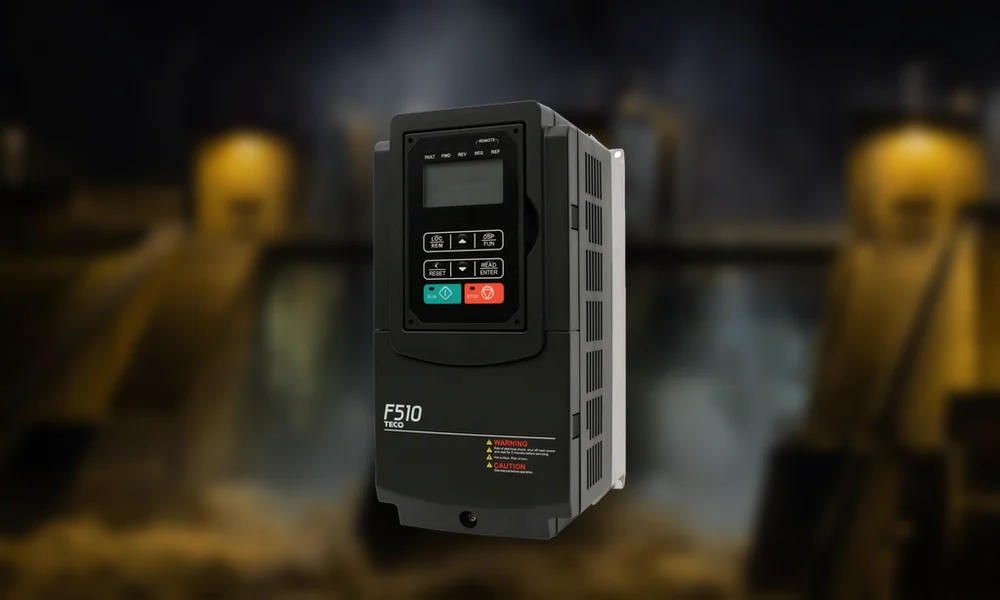
Put a variable speed drive (VSD) in front when the load is a centrifugal pump or fan that runs below full flow for long periods, or when the process needs speed control, torque limiting or a controlled stop. The saving then comes from the lower shaft power at reduced speed, with the IE4 figure on top of it. The drive adds its own losses and the motor runs on a PWM waveform, therefore, three items go on the enquiry.
First, check the speed range against the load torque. For variable torque loads the TECO Te3 runs from 5 to 50 Hz without derating, and the same check applies to the TECO MAXeV4 on the same duty. For constant torque loads held at low speed, or any duty above 50 Hz, send us the duty cycle; forced cooling IC416 is an option when a conveyor or extruder has to sit at low speed for long periods.
Second, the winding: the TECO MAXeV4 is Class H, rated at 180°C, with a maximum Class B rise of 80 K, and its thermistors are specified for drive integration. Our Class H windings on the TECO MAXe3 withstand 2,200 V peak and 8,500 V/µs at the terminals; ask us for the MAXeV4 figure on long cable runs.
Third, bearing currents: from frame 280, we recommend fitting an insulated bearing at the non drive end and a grounding brush at the drive end, and keep the carrier frequency at 5 kHz or lower. Both features are available on the TECO MAXeV4 options list, with a fibre earthing ring as the alternative to the brush. Install the drive and motor to AS 60034.17 and IEC 60034-25.
Energy is approximately 95% of a motor's lifetime cost, so running hours decide the case. On continuous duty the MAXeV4 pays back its premium in two years or less against an IE2 motor and three years or less against IE3. On a motor that runs a few hundred hours a year the premium is not recovered as quickly, and an IE3 TECO Te3 does the job. In between, the kilowatt-hours decide. At 75 kW 4 Pole the gain over IE3 is one whole percentage point, 96.0% against 95.0%: at full load and 8,000 hours a year that is about 6,600 kWh saved per motor per year. At 22 kW the gain is 1.5 points and the saving about 3,000 kWh a year on the same hours.
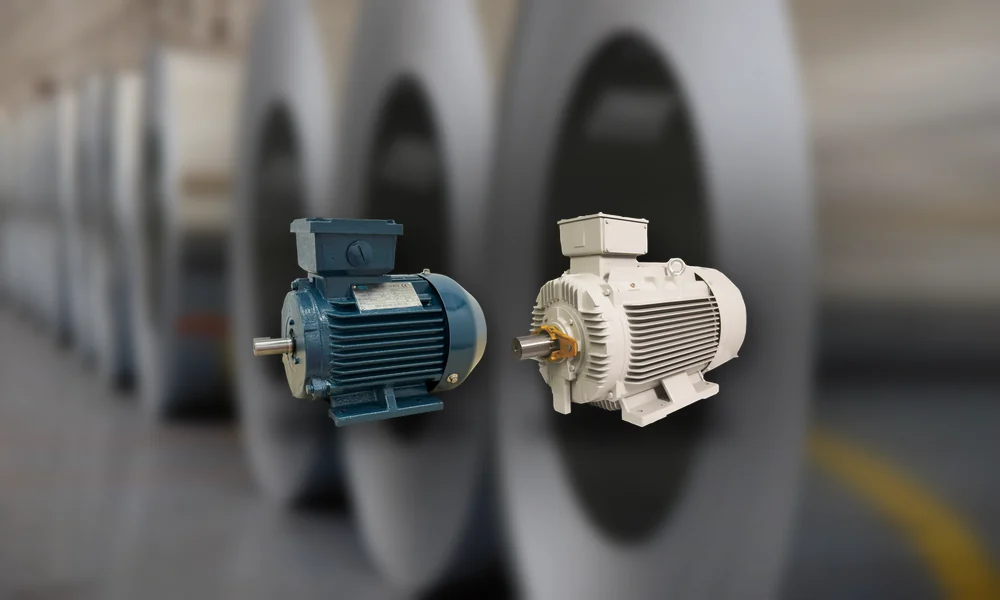
The MAXeV4 keeps IEC 60072-1 frame and shaft dimensions, so it replaces an IE2 or IE3 motor of the same frame on the existing base, coupling and guarding. The terminal box is top mounted and turns in four 90° steps. The rotor is a standard squirrel cage with no magnets, so any qualified repairer services it with standard tools in the local area. The enclosure is rated at IP66 for washdown and outdoor plant. Stock sits in six branches across Australia and New Zealand, and the TECO ModShop adds RTDs, anti-condensation heaters, encoders, insulated bearings and two-pack paint locally.
Give us the load type and its torque curve, the running hours, the starting method and the starts per hour, the ambient and altitude, the cable length if a drive is involved, and the frame of the motor being replaced. With those we confirm the frame, the DOL or VSD duty and the protection options. The full selection sequence is in our article on three phase induction motor selection.
IE4 is the Super Premium efficiency class of IEC 60034-30-1, it is one step above IE3 Premium. The TECO MAXeV4 is IE4 across its range, 0.75 kW to 315 kW; at 22 kW 4 Pole that is 94.5% against 93.0% for an IE3 motor.
No. The TECO MAXeV4 reaches IE4 on a direct-on-line 50 Hz supply. Add a VSD when the load needs speed control or runs at part flow for long periods; the drive is a separate decision from the efficiency class.
Between four points at 0.75 kW and 0.7 points at 250 kW, 4 Pole: 85.7% against 82.5% for 0.75 kW, 94.5% against 93.0% at 22 kW and 96.7% against 96.0% at 250 kW. The gain narrows as the rating rises, so running hours decide the case on larger motors. The whole of life method is in our article on calculating savings in the electric motor industry.
Yes, within the same frame. The TECO MAXeV4 is built to IEC 60072-1 frame and shaft dimensions, so the feet, shaft height and coupling match the IE2 or IE3 motor it replaces. Check the terminal box position and the gland size on site.
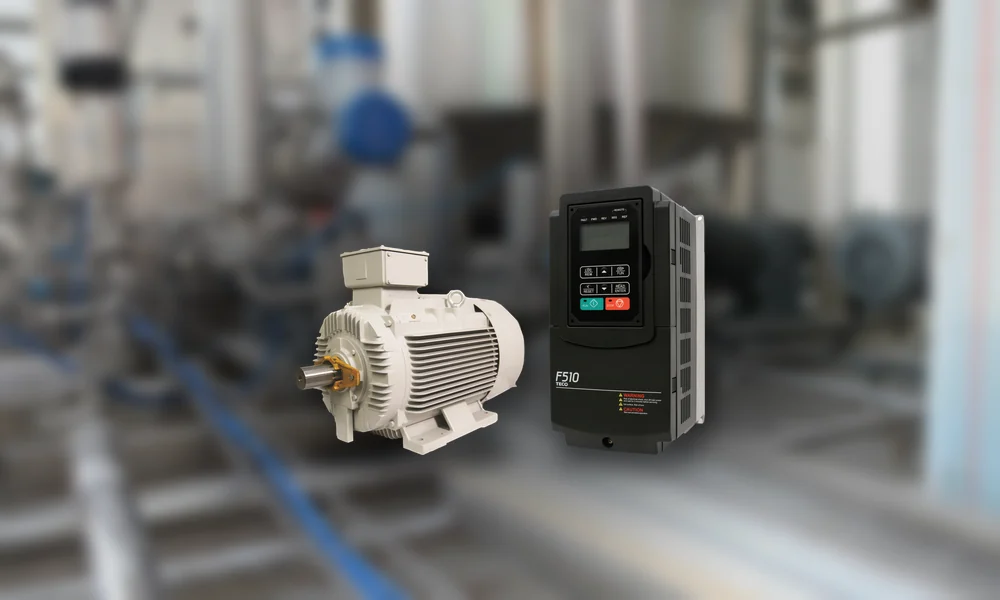
The class is measured on a sinusoidal supply. The installed motor design efficiency is the same regardless of the control, however, on a drive the motor runs on a PWM waveform with very low losses, the IE4 efficiency is higher to start with so further losses are typically very low. On pumps and fans the system saving comes from running at lower speed, with the IE4 motor reducing losses at every operating point.
No. Synchronous reluctance and permanent magnet designs reach IE4 or IE5 and always need a drive, and their repair is specialist work. The TECO MAXeV4 is a squirrel cage induction motor with no magnets: it runs DOL or on a VSD and any qualified motor repairer or site personnel can service it.
MEPS sets a minimum efficiency level, and all TECO stock three phase motors meet or exceed it; IE4 sits above the minimum. The background on AS/NZS 1359 and MEPS is in our article on electric motor energy efficiency in Australia and New Zealand.
Send us the load, the hours and the frame through the Contact us page and we will confirm the MAXeV4 selection, DOL or VSD. The full range of TECO electric motors is on this site.
A variable speed drive (VSD) earns its place when pump flow demand varies throughout the day and the pump would otherwise be throttled or repeatedly cycled. In water and wastewater
AS/NZS 1359 is the series of Australian and New Zealand standards that motor specifications and nameplates have referred to for decades. Many of its parts have since been superseded or
The efficiency class is set by the design and does not move with the way the plant is run. The TECO MAXeV4 is IE4 Super Premium Efficiency to IEC 60034-30-1