
A motor that arrives wrong, or is specified wrong, costs you downtime. Below are 11 questions to check before you order, what getting each one wrong costs, and how to avoid it.
Usually not. A serial number or a kW rating doesn’t tell us the mounting arrangement, the frame variant, the shaft or where the terminal box sits, and those details decide whether the new motor bolts straight in.
What getting it wrong costs: the motor arrives and doesn’t fit the base, the coupling or the cable entry. You either modify the installation on site or wait for a second motor while the plant stays down.
How to avoid it:
TECO product or service: the motor enquiry form asks for most of these details, and the spare parts form takes a nameplate photo. For a new selection, start with the LV Motor Selector.
For hosed-down or wet process areas, specify the higher rating of IP66. In the IP code, the first digit is the dust protection, the second digit of 5 means protection against water jets from all directions; 6 means protection against powerful jets comparable to heavy seas. IP66 is the highest protection for a TEFC motor.
What getting it wrong costs: water gets past seals and into the terminal box or windings. The usual result is an insulation failure or corroded bearings, and a motor out of service well before its time.
How to avoid it:
TECO product or service: TECO MAXe3 and TECO MAXeV4 motors are IP66 as standard, and MAXe3 windings are tropic-proof as standard. TECO Te3 is IP66 rated. See the MAXe3 range.
Only if the duty needs it. An oversized motor runs at partial load, where power factor drops noticeably, so it draws more current per kilowatt delivered than a correctly sized motor.
What getting it wrong costs: a higher purchase price, a larger sized starter or drive, heavier cable, and a lower site power factor, installed and paid for a capacity the load never uses. As an example from the TECO MAXe3 catalogue, a 7.5 kW 4 Pole motor holds efficiency close to 92% from half to full load, but its power factor falls from 0.85 at full load to 0.71 at half load.
How to avoid it:
TECO product or service: the LV Motor Selector and the motor selector filter by industry, application and kW. Our sales engineers check sizing on request through the enquiry form.
Most modern LV motors can, within torque and speed limits, but the insulation and the bearings have to be right for the drive. PWM drives put voltage spikes on the windings and on larger machines can discharge current through the bearings.
What getting it wrong costs: bearing damage from shaft currents (fluting) and insulation stress on the windings, both of which show up months after commissioning, usually as an unplanned outage.
How to avoid it:
TECO product or service: buy the motor and the drive together under the Motor + VSD Package Extended Warranty: up to 36 months (36 months from delivery or 30 months from commissioning, whichever comes first). Drive selection: VSD Selector.
It depends on the load demand. On variable-torque loads TECO MAXe3 motors run from 5 Hz to 50 Hz without derating as a rule; on constant-torque loads the shaft-mounted fan slows down with the motor, so the cooling efficiency falls away at low speed.
What getting it wrong costs: a conveyor or positive-displacement pump run slowly at full torque overheats the winding, trips on thermal protection or shortens insulation life.
How to avoid it:
TECO product or service: IC416 forced cooling kits for MAXe3 and Te3, fitted locally by TECO ModShop. See TECO ModShop.
Not always. TECO motors are designed for up to 1,000 m above sea level; above that, and at high ambient temperatures, the usable output has to be multiplied by derating factors that TECO publishes for MAXe3.
What getting it wrong costs: a motor that is correctly sized on paper runs hot on site, trips in summer or loses insulation life early.
How to avoid it:
TECO product or service: TECO MAXe3 Mining motors, rated for full output in high ambients.
A TECO MAXe3 or Te3 motor is rated 380 V to 415 V, 50 Hz, so it runs on either supply. Check the nameplate before you order: the voltage range, not the single figure on the quote, is what matters.
What getting it wrong costs: a motor run outside its voltage tolerance draws more current and runs hotter; a motor plated for one voltage class connected to another can fail at start-up or in operation.
How to avoid it:
TECO product or service: TECO MAXe3 in 1,000 V versions for underground mining (factory option).
Most people assume multiple starts are possible even on larger frames. TECO publishes a maximum number of DOL starts per hour by frame size, equally spaced and including one cold start: for 4 Pole MAXe3 motors it falls from 22 starts on frames 80 to 112 to 4 starts on the larger frame 315M.
What getting it wrong costs: repeated starts heat the rotor and stator faster than the motor can cool, which ends in a burnt winding or a damaged rotor cage.
How to avoid it:
TECO product or service: TECO soft starters (RSXi, TSXi) and LV VSDs reduce starting stress.
The motor will turn, but with roughly a third of its torque. TECO’s catalogue gives star torque as 0.333 of delta torque, so under load it may not reach speed and it will overheat.
What getting it wrong costs: a motor that stalls on start, trips on overload or runs hot until the winding eventually fails.
How to avoid it:
TECO product or service: TECO star-delta starters and DOL starters, matched to the motor rating.
Replace like for like. TECO fits C3-clearance bearings to all MAXe3 motors, and larger MAXe3 Mining motors on frame 250 and above use a roller bearing at the drive end; a different clearance or seal type changes how the bearing handles heat and grease.
What getting it wrong costs: a bearing that runs hot, loses its grease or fails early, and an unplanned stop to change it again.
How to avoid it:
TECO product or service: genuine bearings and spare parts through the spare parts form and the preferred service centres.
No. Belt drives load the shaft and the drive-end bearing sideways, and TECO recommends limits for belt drive by speed and frame size.
What getting it wrong costs: a bent shaft or a failed drive-end bearing, usually long before the motor’s expected life.
How to avoid it:
TECO product or service: TECO MAXe3 HX for belt-driven pumps and fans.
Only if the motor and that specific drive have been tested together as a combination. For Ex nA motors and dust-protected Ex tb motors, VSD operation is permitted under the conditions TECO lists, with PTC thermistor protection connected on Ex tb.
What getting it wrong costs: an installation that doesn’t match its certificate, which fails a hazardous area inspection and has to be reworked before it can be operated.
How to avoid it:
TECO product or service: TECO MAX Ex motors in Ex e, Ex nA and Ex tb, IECEx certified, for gas groups IIA, IIB and IIC.
If your question isn’t here, ask it in the website chat or send the motor enquiry form with the nameplate photo.
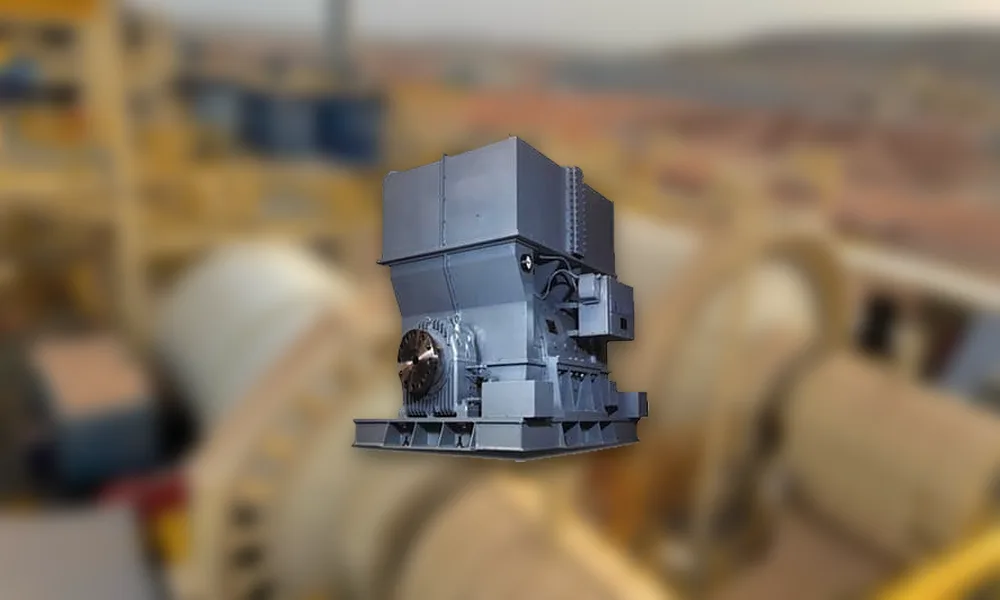
Wound rotor induction motors, also called slip ring motors, are used on mill drives because they give controlled starting under full load. The trade-off is the slip ring and brush
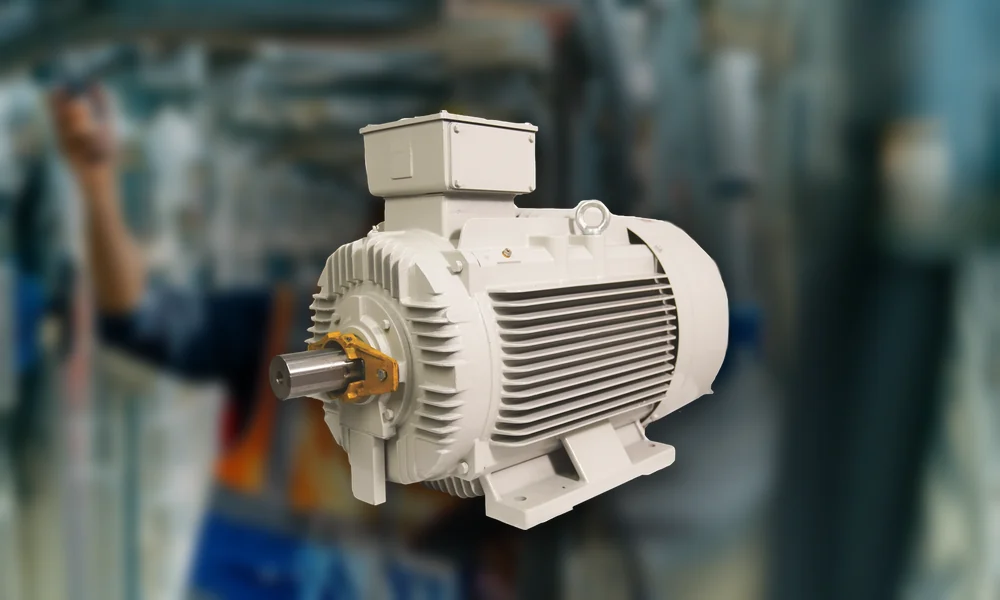
The TECO MAXeV4 is IE4 Super Premium Efficiency to IEC 60034-30-1 from 0.75 kW to 315 kW. At 0.75 kW 4 Pole it runs at 85.7% against 82.5% for an
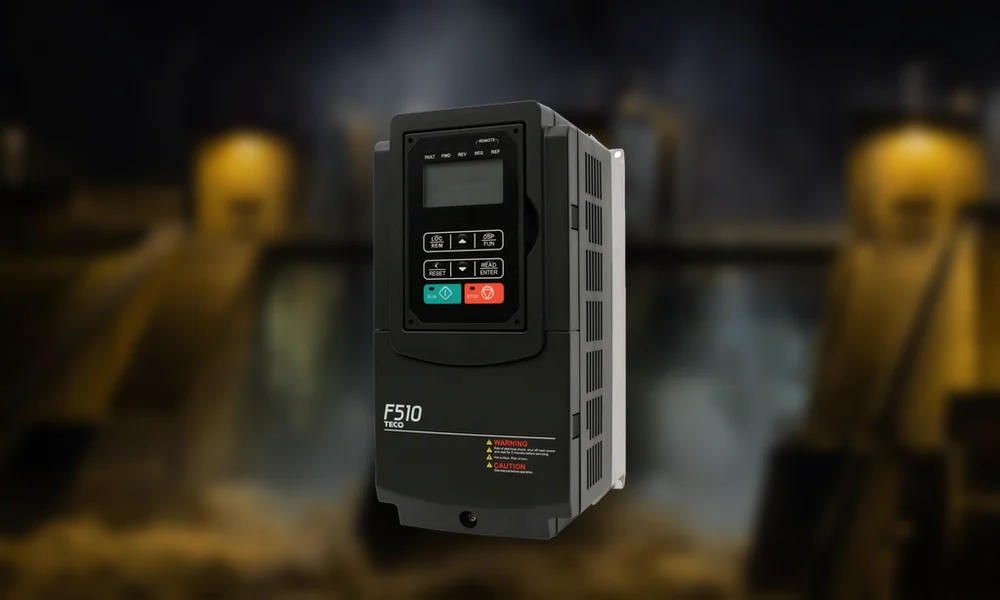
A variable speed drive (VSD) earns its place when pump flow demand varies throughout the day and the pump would otherwise be throttled or repeatedly cycled. In water and wastewater