
The TECO MAXeV4 is IE4 Super Premium Efficiency to IEC 60034-30-1 from 0.75 kW to 315 kW. At 0.75 kW 4 Pole it runs at 85.7% against 82.5% for an IE3 motor and 79.6% for IE2. At 7.5 kW the figures are 92.6% against 90.4%, at 22 kW 94.5% against 93.0%, and at 75 kW 96.0% against 95.0%. The point gap narrows as the rating rises; the kilowatt-hours behind each point grow with the rating, so the larger motor still returns the larger saving.
On continuous duty at high load the MAXeV4 pays back in two years or less against an IE2 motor and three years or less against an IE3 motor. After payback the saving continues for the rest of the motor’s life. On a motor that runs a few hundred hours a year the purchase price carries more weight and the class may matter less.
The TECO MAXeV4 electromagnetic design is optimised for lower losses and lower operating temperature, which in turn extends bearing and insulation life. The insulation is Class H, rated at 180°C, with a Class B temperature rise of 80 K maximum, so the winding runs with 100 K of thermal reserve for ambient and additional loading. From frame 160 the motor carries PTC 150°C thermistors as standard for integration with a protection relay or a drive. The housing frame is cast iron, the cooling is IC411 and the protection is IP66 on every frame size, which is what an outdoor pump station or a wash-down bay requires.
Lower kilowatt-hours mean lower CO2 for the same shaft output, and the IE4 gain on a MAXeV4 starts at commissioning and runs for the life of the motor. Sites with ESG (environmental, social and governance) targets report the saving as a measured reduction in energy use, which is why the motor schedule is one of the first places an energy audit reviews. In Australia and New Zealand the legal floor is MEPS (minimum energy performance standards): every TECO MAXe3, Te3 and MAXeV4 meets or exceeds it, and the MEPS background for this market is in our article on motor energy efficiency.
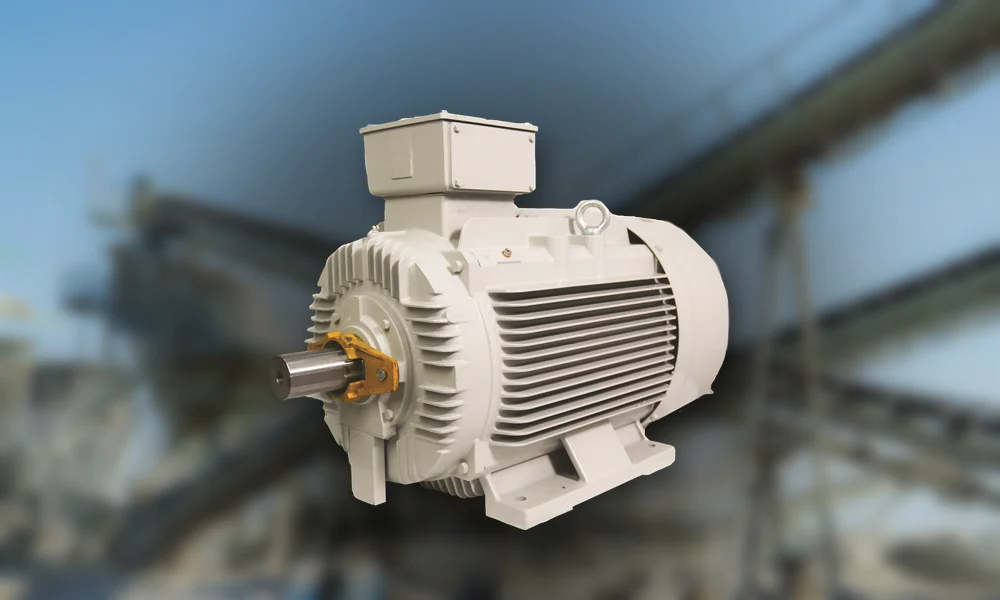
The TECO MAXeV4 is dimensioned to IEC 60072-1 and matches the frame and shaft dimensions of the IE2 and IE3 motors it replaces. The swap needs no change to baseplates, couplings or guarding, and no change to the pump, the pipework or the electrical arrangement. It is a squirrel cage induction motor with no magnets, so any qualified motor repairer or site personnel can service it with standard tools. It runs direct-on-line, on a soft starter or on a variable speed drive, and the IE4 gain is available under all three, so a fixed-speed conveyor captures the saving without a drive investment. Stock is held across our six branches in Australia and New Zealand, and the TECO ModShop fits heaters, RTDs, encoders, special paint and terminal box rotation locally.
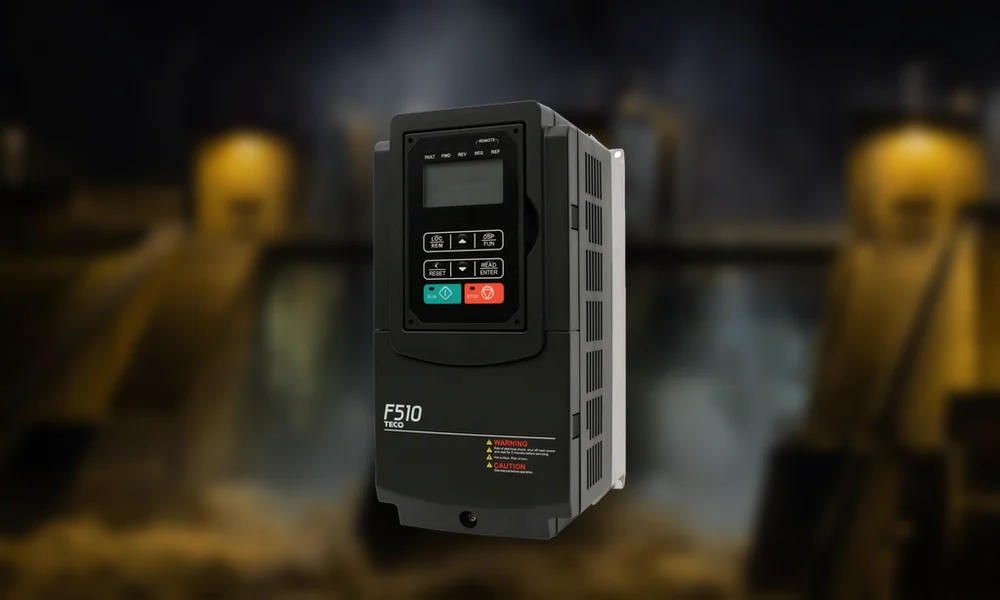
On centrifugal pumps and fans the larger saving usually comes from speed. A variable speed drive matches motor speed to the flow or pressure the process needs, and the energy consumed falls with it. The TECO F510 is built for variable-torque pump and fan duty, with PID control, sleep mode, dry-run protection and native control of up to four pumps. The TECO E710 lowers energy use on smaller pumps by matching pump speed to system demand. Run a TECO MAXeV4, MAXe3 or Te3 on variable-torque loads between 5 Hz and 50 Hz without derating, install these to AS 60034.17 and IEC 60034-25, and keep the motor under the drive so the savings stack. Our low voltage drive range, the TECO A510s, E510s, E710, F510 and L510s, covers ratings up to 600 kW.
Take the nameplate rating, the measured load and the running hours. Compare the full-load efficiency of the installed motor with the TECO MAXeV4 figure for the same rating and poles, and multiply the difference by the hours. Our article on calculating savings sets out the whole-of-life formula, and the total cost of ownership article covers the environmental side. Send us the three numbers and we return the comparison for the frames on your schedule.
TECO MAXe3 motors (IE3 to 450 kW), Te3 motors (IE3 to 500 kW) and TECO MAXeV4 motors (IE4 to 315 kW) are held in stock across our six branches in Australia and New Zealand. The full range of TECO electric motors is on this site.
Because energy is approximately 95% of what a motor costs over its life, so a higher efficiency class lowers the largest line on the bill and the CO2 behind it. On continuous duty the TECO MAXeV4 recovers its price difference in two to three years.
On continuous duty at continuous high load, yes: the TECO MAXeV4 pays back in two years or less against IE2 and three years or less against IE3. On a motor that runs a few hundred hours a year, check the hours first.
Lower losses mean lower operating temperature, and the TECO MAXeV4 design uses that to extend bearing and insulation life. The Class H insulation with a Class B temperature rise adds 100 K of thermal reserve for ambient and additional loading.
On a centrifugal pump or fan the drive matches speed to demand and the energy drawn falls with the speed. The drive leaves the motor’s efficiency class unchanged, so an IE4 motor under a TECO F510 saves on both counts.
Yes. Compare the full-load efficiency of the installed motor with the TECO MAXeV4 figure at the same rating and poles, multiply the difference by the running hours, and use the whole-of-life formula in our calculating savings article. Send us the nameplate and hours and we run it for you.
A motor in the IE4 Super Premium Efficiency class of IEC 60034-30-1, it is one class above IE3. The TECO MAXeV4 is IE4 across its range, with a squirrel cage induction design that needs no drive to run it.
It means that a larger share of the electrical input reaches the shaft. A TECO MAXeV4 75 kW 4 Pole motor is 96.0% efficient, therefore 4.0% of the input is lost as heat compared to 5.0% for an IE3 motor of the same rating.
Send us the nameplate, the measured load and the running hours through the Contact us page and we return the efficiency case for the motors on your schedule.
A variable speed drive (VSD) earns its place when pump flow demand varies throughout the day and the pump would otherwise be throttled or repeatedly cycled. In water and wastewater
AS/NZS 1359 is the series of Australian and New Zealand standards that motor specifications and nameplates have referred to for decades. Many of its parts have since been superseded or
An IE4 induction motor reaches its efficiency class on a plain 50 Hz supply, with a contactor and an overload relay in front of it. The TECO MAXeV4 is tested